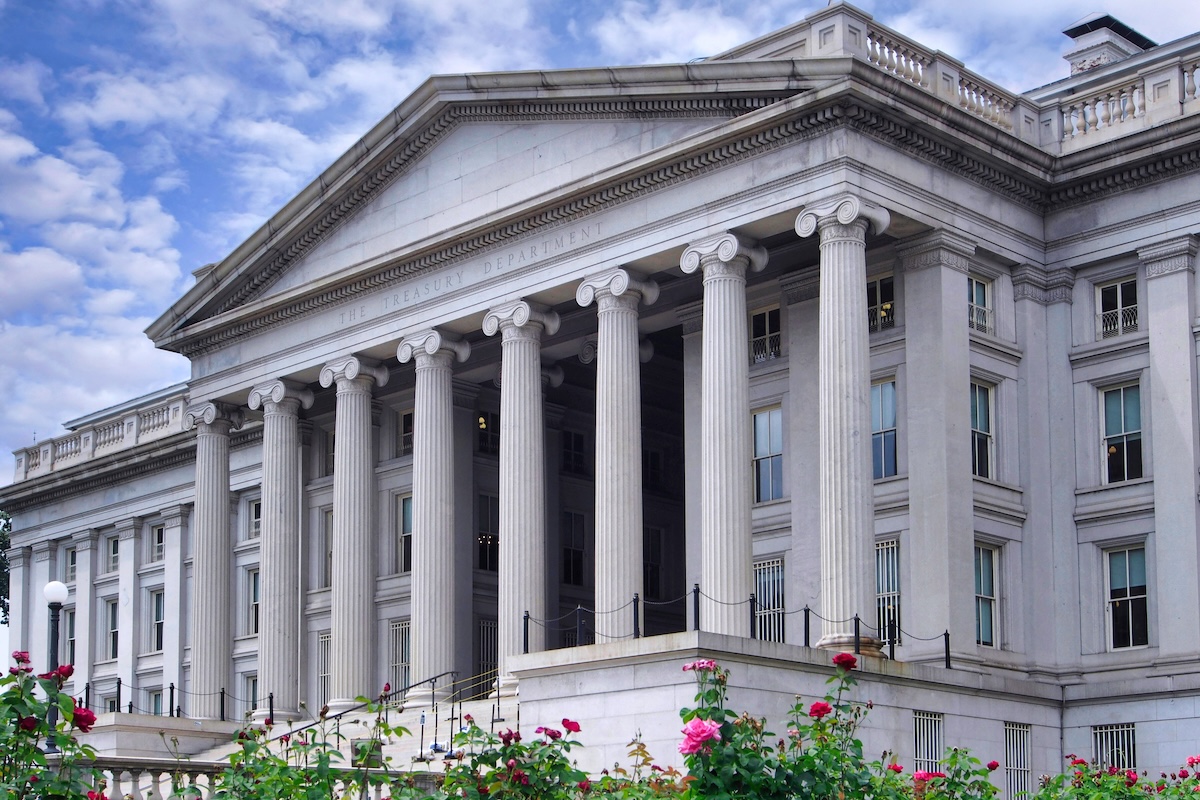
The Treasury Department’s Financial Crimes Enforcement Network (FinCEN) issued an alert directing banks and credit unions to detect and report suspicious activity tied to federal student aid fraud. It’s the first FinCEN alert aimed specifically at the roughly $120 billion in annual Federal Student Aid awards. You can read the full alert here (PDF).
Financial aid refunds land in college student checking accounts, which makes banks the last realistic checkpoint before stolen taxpayer money disappears. Until now, most fraud detection happened at the college or the Education Department. FinCEN is pulling the banking system into the enforcement chain.
Two Major Fraud Schemes
Ghost students: Fraud rings steal personally identifiable information (sometimes belonging to minors) to impersonate real people and enroll them at open-admission colleges. FinCEN notes that fraudsters increasingly use AI tools to generate documents that pair stolen PII with fabricated details, creating synthetic identities that clear standard verification. The identity theft victims usually have no idea aid is being drawn in their names. See What Are Ghost Students? Financial Aid Fraud Explained for a full breakdown of how this works.
Straw students: These are willing participants who sell their PII for a fee. A ring enrolls them, collects the financial aid refund, and moves on. FinCEN cites cases where organizers ran dozens of straw students at once, and warns that corrupt campus staff sometimes act as insiders, recruiting participants and altering academic records to keep aid flowing.
By The Numbers
- $120 billion: annual federal student aid awarded in grants, work-study, and loans
- 13 million: students receiving federal aid each year
- $1 billion: fraud the Education Department says it blocked during 2025
- 35%: share of applications flagged as suspicious at South Bay community colleges in June 2024
- $5.6 million: value of fraudulent loans in one cited case involving a former university financial advisor and 60-plus straw students
What Banks Are Being Told To Look For
FinCEN laid out seven red flag categories. Among them: accounts with no enrollment history receiving refunds that are immediately wired out, single accounts receiving refunds for multiple unrelated students, business checking accounts collecting student refunds with no business rationale, and refunds converted straight into digital assets.
Most aid refunds arrive by ACH from a school or a contracted intermediary, and transaction descriptions often carry a giveaway string, such as “LCC REFUND” or “LCC REFUND John Doe.”
Institutions filing suspicious activity reports are told to include the term “FIN-2026-FSAFRAUD” in Field 2 and select Field 34(z), Fraud – Other.
How This Connects
The ghost student problem has been tracked since it surfaced at scale in California, where 31.4% of community college applications in 2024 were identified as fraudulent, with roughly 1.2 million bogus applications and 223,000 confirmed fake enrollments across 116 campuses. The College of Southern Nevada lost $7.4 million in a single semester. The Education Department’s inspector general has around 200 open investigations covering more than $350 million.
The Department has also built screening into the aid application itself: see Education Department’s New FAFSA Tool Targets $1 Billion Student Aid Fraud Problem. Congress is moving on a separate track: the House passed the No Aid for Ghost Students Act 249–172 on June 10, 2026, which would run every FAFSA through identity fraud screening starting October 1, 2026. The bill is still awaiting Senate action.
Banks now face examiner expectations around student aid refund monitoring, which may mean more holds and account reviews for legitimate students receiving large refunds. If your identity has been used to enroll somewhere, request your Federal Student Aid records through StudentAid.gov and file a report with the FTC at IdentityTheft.gov. A full walkthrough on student loan identity theft covers the recovery steps in detail.