
Credit: Universal Pictures
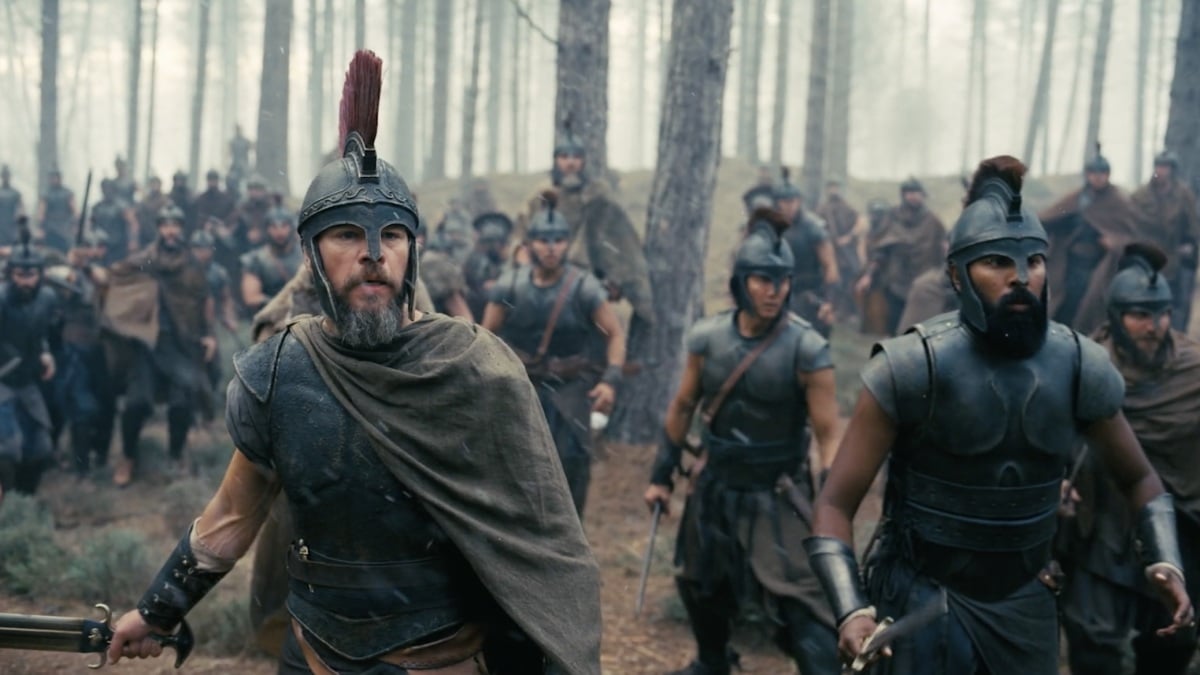
Christopher Nolan’s upcoming interpretation of The Odyssey is shaping up to be one of - if not the - biggest movie events of the year. Demand for tickets put such a strain on AMC Theaters’ network that the company had to put all customers in a queue just to access the site or app - even if they weren’t trying to buy tickets. Despite being one of the oldest stories in the world, The Odyssey is attracting a ton of buzz. Chances are, if you’re headed to a movie theater this summer, you’ll be checking this one out.
But while all movie theaters showing The Odyssey will show the same cut of the film, which theater you choose to watch it in makes a huge difference. Sure, you can see The Odyssey any number of times and walk away having experienced the same story, with the same actors, speaking the same lines. But the experience will be very different.
The Odyssey Was Shot on IMAX
The Odyssey is the first major motion picture to be shot entirely with IMAX cameras. Many movies have incorporated IMAX cameras before, including most of Christopher Nolan’s recent works. But The Odyssey marks the first time IMAX was the exclusive camera used in a film’s photography.
You probably know IMAX as the specialized movie theater showcasing huge versions of movies. It won’t surprise you, then, to learn that IMAX cameras shoot on a huge film format - and yes, they shoot on film, not digital. IMAX cameras record to 70mm film, which itself is already a large film format. But IMAX cameras do something different than typical 70mm setups: the cameras run the film horizontally, rather than vertically, which allows them to capture way more of an image with each frame. This discussion gets a bit technical, so check out Callum Vandenberg’s excellent explanation for a great visual breakdown.
Without getting too into the weeds, IMAX is the biggest and highest quality image format we currently have for shooting movies. Filmmakers don’t tend to use it for a number of reasons: it’s expensive, especially in our digital era, and the cameras are cumbersome. Large image formats mean large cameras, and they’re very loud - though IMAX did develop a quieter version of its camera for Christopher Nolan’s latest movie. But when IMAX is utilized, it allows for a frame that completely envelops the audience. When you’re sitting in a true IMAX theater watching a movie made for IMAX, you really can’t see anything but the movie. The edges of the frame aren’t in your direct line of sight; they take over your peripheral vision. It’s a totally different experience than a traditional movie projection.
The Odyssey Has Many Projection Options
Most movie theaters cannot project IMAX this way. Even most IMAX theaters can’t do it. Only IMAX 70mm theaters can, and they’re rare. Eight IMAX 70mm theaters exist in the U.S., and if you want to see The Odyssey in its original film format, you’ll need to visit one of them.
Your local movie theater might offer a few different screenings of The Odyssey, even if IMAX 70mm is off the table. You might be offered an IMAX screening, 70mm, 35mm, Dolby Vision, or Premium Large Format, if not others. While each has its pluses and minuses, for this discussion we’ll focus on aspect ratio, which are as follows:
- IMAX 70mm: 1.43:1
- IMAX: 1.90:1
- 70mm: 2.20:1
- 35mm: 2.39:1
- Dolby Vision: 1.85:1 or 2.39:1
- Premium Large Format: 1.85:1 or 2.39:1
That’s a lot of numbers, but here’s a simplified explanation: 2.39:1 is the standard widescreen aspect ratio for most movies today. If you see a movie in a theater, especially if it’s quite wide, chances are it’s 2.39:1. The smaller the first number in the aspect ratio, the larger the frame becomes. As such, 70mm’s 2.20:1 gets you slightly more image than 35mm’s 2.39:1. Dolby Vision and Premium Large Format theaters can show the movie in 1.85:1, which gives you even more image, but they can also project 2.39:1, which matches 35mm’s widescreen frame. IMAX (not IMAX 70mm) has a ratio of 1.90:1, which means you get the most image outside of IMAX 70mm.