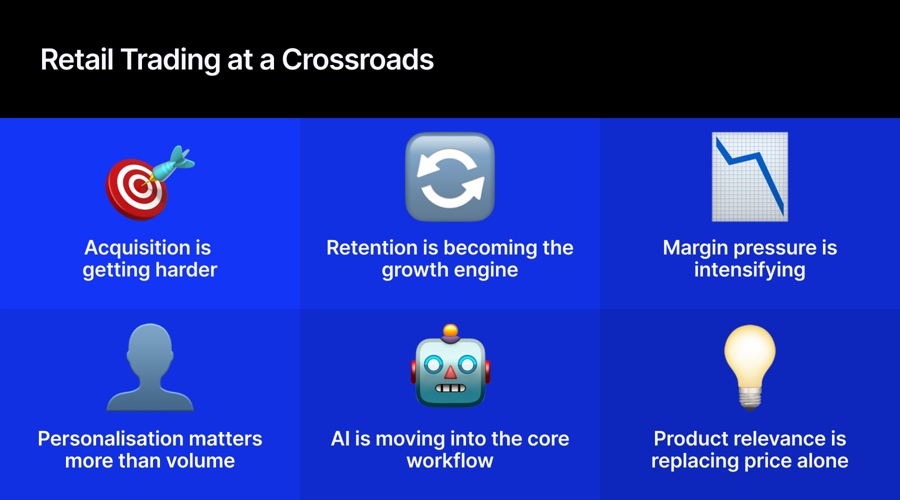
For years, brokers relied heavily on rapid client acquisition, fuelled by aggressive marketing and enticing bonuses. This approach drove impressive growth but was always vulnerable to shifting regulations and market dynamics. Today, that landscape has changed forever. Stricter regulations, heightened scrutiny, and relentless margin pressure have restructured the playing field, forcing brokers to abandon many of their traditional growth levers.
At the same time, acquiring new clients has become a far more complex and costly endeavour. Regulatory constraints and advertising restrictions imposed by major online platforms have raised barriers that brokers must now navigate carefully.
In this new environment, success depends less on quick wins and more on building lasting relationships. Brokers are being compelled to rethink how they engage with clients, shifting from a focus on acquisition to one centred on retention, relevance, and long-term value.
While the environment is undoubtedly more challenging, it is also forcing the industry to mature, with brokers developing more sustainable and insightful engagement models.
From Acquisition to Retention
One of the clearest shifts across the industry is the move from prioritising acquisition to focusing on retention. Bringing in new clients today is far more challenging than it was just a few years ago. MiFID II and product intervention rules in Europe have imposed advertising restrictions, and limitations imposed by platforms such as Google and Meta have raised the bar for acquisition efforts.
This makes nurturing existing client relationships more critical than ever. Reducing churn by enhancing the overall platform experience, client engagement and interaction, as well as client satisfaction, is no longer just a support function — it has become central to sustainable growth.
A Different Engagement Model
Client engagement has evolved beyond simple, generic email blasts. Today, brokers have access to a wide array of communication channels, including push notifications, SMS, and messaging apps. But having more channels is not enough; relevance is key.
Clients expect communication that reflects their interests and trading behaviour. Engagement improves significantly when communications reflect a client’s actual trading behaviour and interests. For example, a trader focused on commodities is far more likely to engage with targeted updates on geopolitical developments affecting the prices of oil or gold than with broader market commentary.
This is why understanding the client — in terms of what they trade, how they behave, and what they are interested in — has become essential. Engagement needs to be as personalised and data-driven as possible.
The Impact of Margin Pressure
Margin compression is now one of the most pressing challenges for brokers. Competition has driven spreads lower across many core products, sometimes turning pricing into a race to the bottom. Meanwhile, operational costs, especially manpower, remain high, squeezing profitability.
However, this also presents an opportunity for innovation, pushing firms to become leaner, more efficient, and more focused on where value is truly created.
To stay competitive, brokers are turning to technology and AI to automate routine processes and support client engagement. This approach helps control costs without sacrificing service quality. The goal is not to eliminate the human touch, but to deploy it where it adds the most value.
Competing Through Product Relevance
As pricing becomes less of a differentiator, product strategy is becoming more important. The industry has expanded beyond pure FX focus to include a much broader range of assets, including equities, commodities, and cryptocurrencies.
Multiple product cycles over the past decade have required brokers to adapt accordingly to meet clients’ expectations. Staying relevant means offering products that clients want, precisely when they want them.
This is often driven by market events. When a major IPO attracts global attention, brokers who can quickly provide access are better positioned to capitalise. There is also a growing interest in less commoditised products, where competition is lighter and spreads are healthier.
Looking ahead, emerging areas such as prediction markets are gaining traction and may become important components of the retail trading ecosystem.
The Role of Regulation
Regulation has played a major role in shaping today’s market. There is no question that improvements in transparency, client protection, and risk disclosure are important and positive developments. However, there is ongoing debate about whether regulatory measures have become overly restrictive, limiting not just what clients are informed about but what they are permitted to do. Striking the right balance between protection and access will remain one of the industry’s central challenges as engagement models continue to evolve.